
Horizon Financial Group
  • HOME
  • SERVICES
    • GROUP PENSION SERVICES
    • EMPLOYEE BENEFITS
    • BUSINESS OWNERS
      • FINANCIAL ADVICE
      • RETIREMENT PLANNING
      • ESTATE PLANNING
      • SUCCESSION PLANNING
    • INCORPORATED PROFESSIONALS
      • FINANCIAL ADVICE
      • RETIREMENT PLANNING
    • EXECUTIVES
      • FINANCIAL ADVICE
      • RETIREMENT PLANNING
      • ESTATE PLANNING FOR YOUNG FAMILIES
      • ESTATE PLANNING FOR RETIREES & MATURE FAMILIES
    • FINANCIAL ADVICE
    • INSURANCE
      • LIFE
        • MORTGAGE
      • CRITICAL ILLNESS
      • DISABILITY
      • TRAVEL
      • HEALTH & DENTAL
      • PERSONAL
      • CORPORATE
    • INVESTMENT PLANNING
      • TAX FREE SAVINGS ACCOUNT
      • REGISTERED EDUCATION SAVINGS PLAN
      • REGISTERED RETIREMENT SAVINGS PLAN
      • REGISTERED RETIREMENT INCOME FUND
      • ANNUITIES
    • ESTATE PLANNING
      • YOUNG FAMILIES
      • RETIREES AND MATURE FAMILIES
      • BUSINESS OWNERS
  • ABOUT
    • ABOUT
      • MARC SAYER
      • VALERIE SAYER
      • BARRIE MACDONALD
      • GREGORY KLEIN
      • CONNER ANASTASAKOS
    • TESTIMONIALS
    • PROCESS
      • INDIVIDUAL PLANNING
      • GROUP BENEFITS
      • GROUP RETIREMENT
    • VALUE PROPOSITION
    • SUPPLIERS
    • RESOURCES
    • PRIVACY & TERMS OF USE
  • BLOG
  • CONTACT
  • CLIENT LOGIN
  • Click to open the search input field Click to open the search input field Search
  • Menu Menu
  • Link to LinkedIn
  • Link to X

Personal Tax Planning Tips – End of 2020 Tax Year
December 2, 2020/in 2020 Only, Blog, Charitable Gifting, Coronavirus, Coronavirus - Associates, Coronavirus - Practice Owners, Coronavirus - Retired, Coronavirus - Retiring, Coronavirus - Students, disability, disability insurance, Family, financial advice, Financial Planning, health benefits, pension plan, rdsp, Registered Education Savings Plan, rrsp, tax, Tax Free Savings Account/by Horizon Financial

Now that we are reaching the end of the tax year, it’s an excellent time to review your finances. We’ve listed below some of the critical areas to consider and provide you with useful guidelines.

We have divided our tax planning tips into five sections:

  • Tax Deadlines

  • Individual tax issues

  • Family tax issues

  • Managing your investments

  • Retirement planning

Tax Deadlines for 2020 Savings

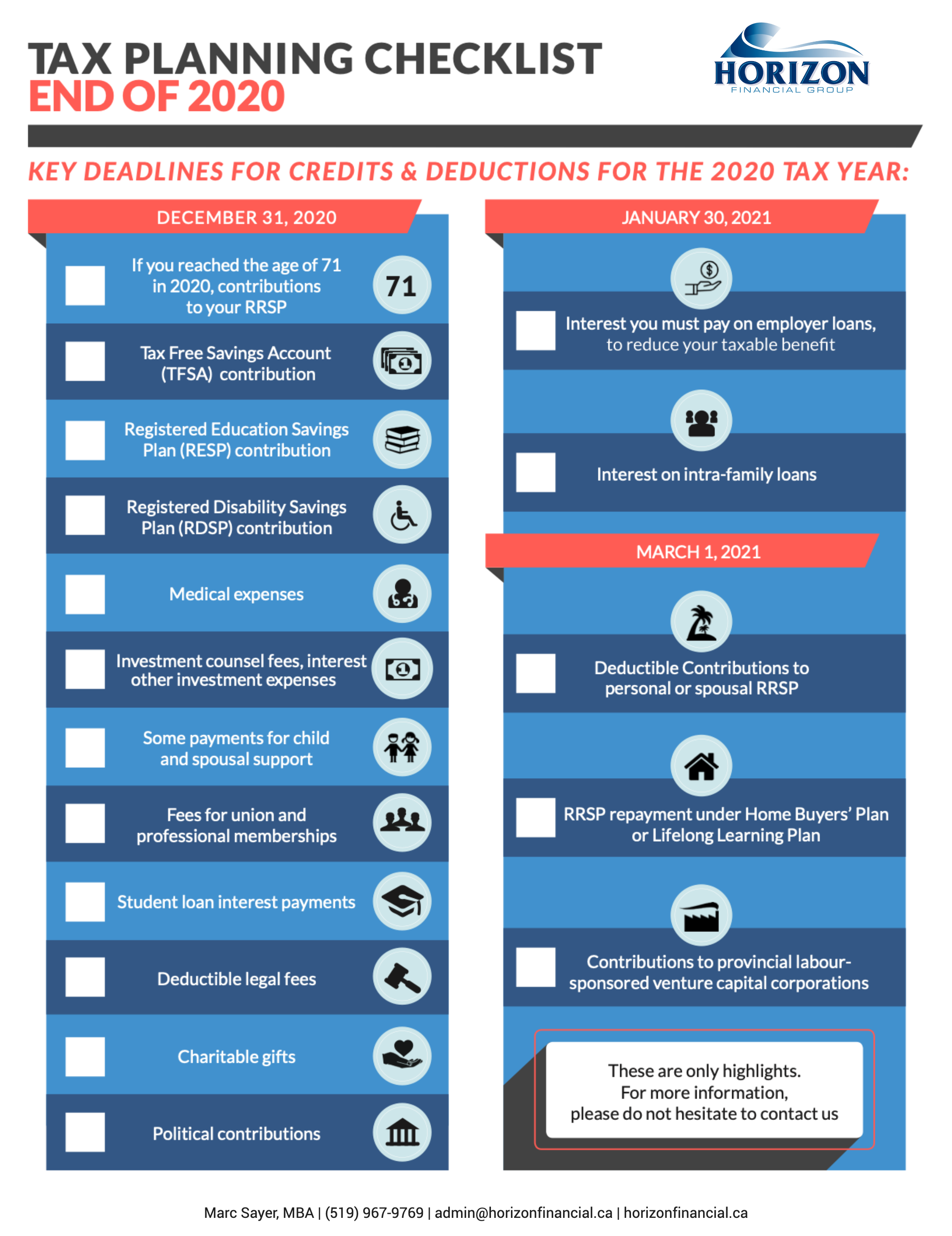
December 31, 2020:

  • If you reached the age of 71 in 2020, you can’t contribute to your RRSP after this date

  • Use up your TFSA contribution room

  • Contribute to an RESP to get the Canadian Education Savings Grant (CESG) and the income-tested Canada Learning Bond (if eligible).

  • Contribute to an RDSP to get the Canada Disability Savings Grant (CDSG) and the income-tested Canada Disability Savings Bond (if eligible).

  • Medical expenses

  • Investment counsel fees, interest and other expenses relating to investments

  • Some payments for child and spousal support

  • Fees for union and professional memberships

  • Student loan interest payments

  • Deductible legal fees

  • Charitable gifts

  • Political contributions

January 30, 2021

  • Interest on intra-family loans

  • The interest you must pay on employer loans to reduce your taxable benefit

March 1, 2021

  • Contributions to provincial labour-sponsored venture capital corporations

  • RRSP Repayment under Home Buyers Plan or Lifelong Learning Plan

  • Deductible contributions to a personal or spousal RRSP

Individual Tax Issues

To help Canadians deal with financial hardships due to job loss because of COVID-19, the Canadian government introduced several benefit programs. If you received any of these benefits, you should be aware of the tax ramifications.

The Canada Emergency Response Benefit (CERB) was the first benefit program issued by the government and ran until September 26, 2020. If you received the CERB at all during 2020, the government will issue you at T4A, showing how much money you received from the CERB program. You must then declare that as income when filing your 2020 income tax return. Since no tax was taken off at the source, be sure to put aside money to pay for potential income taxes on your CERB income.

As of September 27, 2020, the government offered three replacement benefit programs:

  • Canada Recovery Benefit (CRB)
    This is for people impacted by COVID-19 who work but are not eligible for EI (e.g. self-employed).

  • Canada Recovery Sickness Benefit (CRSB)
    This is for people who are employed cannot work due to COVID-19 and do not have access to paid sick leave.

  • Canada Recovery Caregiving Benefit (CRCB)
    This is for people who must miss work to care for a family member who has COVID-19.

For all three of these programs, the government will be withholding 10% in taxes upfront, but you may end up owing extra tax, depending on the rest of your income for 2020, so it’s important to set extra money aside for taxes.

Also, there is a unique condition for the CRB only. If you make over $38,000 in 2020 (excluding the CRB), you will have to pay back the CRB at a rate of 50 cents for each dollar of CRB you earned above the threshold.

If you paid interest on an eligible student loan in 2020, you can claim a non-refundable tax credit in the amount of interest you paid by December 31. In addition, you should be aware that student loan payments were frozen for six months – from March 30 to September 30. No interest accrued on student loans during that period.

Family Tax Issues

  • Check your eligibility for the Canada Child Benefit
    (CCB)
    To receive the Canada Child Benefit in 2021/22, you need to file your tax returns for 2020 as the benefit is calculated using your family income from the previous year. Eligibility for the CCB depends on set criteria such as your family’s income, how many children you have, and how old they are. You may qualify for a full or partial amount, depending on whether you have full custody or shared custody.

  • Consider family income splitting

    The CRA offers a prescribed low-interest rate on family loans. Therefore, it makes sense to consider setting up an income splitting loan arrangement with your family members. If you do this, you can potentially lock in a family loan at a low-interest rate of 1% and then invest the borrowed money into a higher return investment while benefitting from your family member’s lower tax status. Don’t forget to adhere to the Tax on Split Income rules.

Managing Your Investments

  • Use up your TFSA contribution room

    If you can, it’s worth contributing the full $6,000 to your TFSA for 2020. You can also contribute more (up to $69,500) if you are 29 or older and haven’t made any previous TFSA contributions.

  • Contribute to a Registered Education Savings Plan (RESP)

    The Registered Education Savings Plan (RESP) is a savings plan for parents and others to save for a child’s education. The Canada Education Savings Grant (CESG) will match up to 20% of your contributions up to a maximum of $2,500.

    That means the CESG can add a maximum of $500 to an RESP each year. The grant room accumulates until your child turns 17. Therefore, any unused CESG amounts for the current year are automatically carried forward for possible use in the future years.

    The income-tested Canada Learning Bond (CLB) is paid directly to a child’s RESP by the Canadian government to low-income families. No personal contributions are required to receive the CLB.

  • Contribute to a Registered Disability Savings Plan (RDSP)

    The Registered Disability Savings Plan (RDSP) is a savings plan for parents and others to save for the financial security of a person who is eligible for the Disability Tax Credit (DTC). The government will pay a matching Canada Disability Savings Grant (CDSG) up to 300% – depending on the beneficiary’s adjusted family net income and amount contributed.

    Also, low-income Canadians with disabilities may be eligible for a Canada Disability Savings Bond (CDSB). If you qualify, it will be paid directly to your RDSP.

    The government will pay matching grants or bonds into the RSDP up to and including the end of the year the recipient turns 49. Be aware that there is a 10-year carry-forward of CDSG and CDSB entitlements.

  • Donate securities to charity

    Donating by year-end will provide you with tax savings. If you donate eligible securities or mutual funds, capital gains tax does not apply, and you can receive a tax receipt for their full market value. Also, the charity gets the full value of the securities.

  • Think about selling any investments with unrealized capital losses

    It might be worth doing this before year-end to apply the loss against any net capital gains achieved during the last three years. The last trading date for 2020 for Canadian and US publicly traded stocks will be Tuesday December 29th in order to record the gain or loss in the 2020 taxation year.

    Conversely, if you have investments with unrealized capital gains that cannot be offset with capital losses, it may be worth selling them after 2020 to be taxed on the income the following year.

  • Consider the timing of purchasing of certain non-registered investments

    Suppose you are considering purchasing an interest-bearing investment like a guaranteed investment certificate (GIC) with a maturity date of one year or more. In that case, you may consider delaying the purchase to the following year, so you don’t have to pay tax on accrued interest until 2021. You should also consider this with mutual funds that make taxable distributions before the end of 2020, consider delaying this until early 2021. Don’t pay taxes earlier than necessary.

  • Check if you have investments in a corporation

    The new passive investment income rules apply to tax years from 2018 onwards. They state that the small business deduction is reduced for companies with between $50,000 and $150,000 of investment income. Therefore, the small business deduction has entirely stopped for corporations that earn a passive investment income of more than $150,000.

    Note – At a provincial level, both Ontario and New Brunswick do not follow the federal rules to limit access to the small business deduction.

Retirement Planning

  • Make the most of your RRSP

    The deadline for making contributions to your RRSP for the year 2020 is March 1, 2021. The deduction limit for 2020 is limited to 18% of the income you earned in 2020, to a maximum of $27,230. This maximum amount is impacted by the following:

  1. Any pension adjustment

  2. Any previous unused RRSP contribution room

  3. Any pension adjustment reversal.

Remember that deducting your RRSP contribution reduces your after-tax cost of making said contribution.

  • Check when your RRSP is due to end

    If you reach the age of 71 during 2020, you must wind up your RRSP this year. You must make your final contribution to it by December 31, 2020.

  • Convert to RRIF before year-end

    If you turned 65 during 2020 or are already older than 65, you’re entitled to a pension credit that can fully or partly offset the tax on the first $2,000 of eligible income annually. Consider setting up an RRIF before year-end to pay out $2,000 annually if you don’t have any other eligible pension income.

If you have any questions about your taxes for 2020, contact us – we can help you!
https://horizonfinancial.ca/wp-content/uploads/2020/12/Personal-tax-planning-tips-2020@1000px.png 563 1000 Horizon Financial https://horizonfinancial.ca/wp-content/uploads/2019/12/horizonEnfold2.jpg Horizon Financial2020-12-02 14:07:542020-12-02 14:48:37Personal Tax Planning Tips – End of 2020 Tax Year

Investing as a Business Owner

October 1, 2020/in Blog, Business Owners, corporate, Investment, rrsp, Tax Free Savings Account/by Horizon Financial

Investing as a Business Owner

Many business owners have built up earnings in their corporation and are looking for tax efficient ways to pull the earnings out to achieve their personal and business financial goals such as:

  • building and protecting your savings

  • providing for loved ones

  • planning for retirement

Factors to consider when investing as a corporation:

What’s the purpose of the investment? First, think about what you’ll be doing with your savings. This will help dictate what savings vehicle is best suited for your situation. Then consider the following factors:

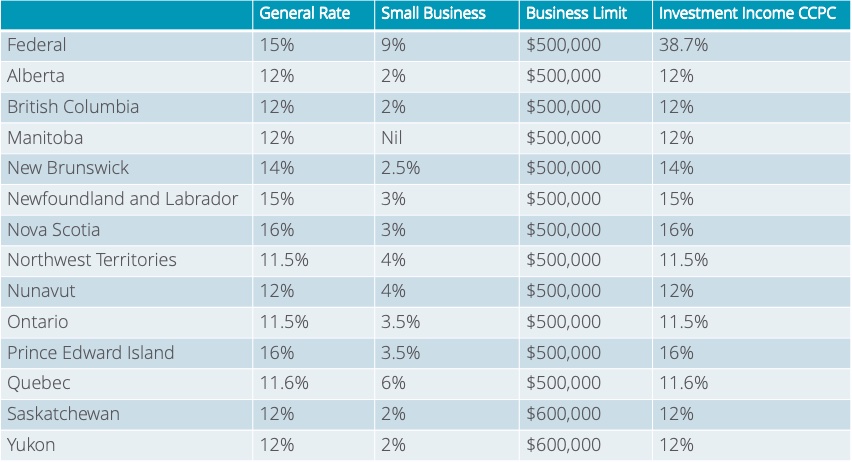
  • Taxes: As a small business owner, you have access to the small business tax rate which is typically lower than your personal tax rate. (See table below.) Also, as of January 1, 2019, the Federal Budget decreased the small business limit for corporations with a set threshold of income generated from passive investments.

2019 Corporate Income Tax Rates

  • Taxes on investment growth: Depending on what you invest in, you will want to review this as different asset types are taxed at different rates.

  • Timing: You can control the timing of the payout which means you could potentially defer paying out the money until you need it and determine if you’d like to pay it out as salary or dividend.

  • Creditor Protection: Sometimes, investments held inside a corporation can be vulnerable to creditors, therefore you may want to consider using a holding company or trust or pay out money to yourself personally. This can be complex and requires professional advice.

  • Capital Gains Exemption: If your investment grows too large, it may endanger your qualification for the lifetime capital gains exemption that ‘s available when shares of a qualified small business corporation are sold or transferred.

For business owners, before investing personally or corporately, it’s certainly worth seeking professional advice to ensure that it suits your individual circumstances. 

Contact Us
https://horizonfinancial.ca/wp-content/uploads/2020/10/Slide1.jpeg 405 720 Horizon Financial https://horizonfinancial.ca/wp-content/uploads/2019/12/horizonEnfold2.jpg Horizon Financial2020-10-01 00:36:002020-10-01 00:42:05Investing as a Business Owner

6 Steps to Retirement Success

August 5, 2020/in Blog, Business Owners, Family, Investment, Retirees, rrsp, Tax Free Savings Account/by Horizon Financial

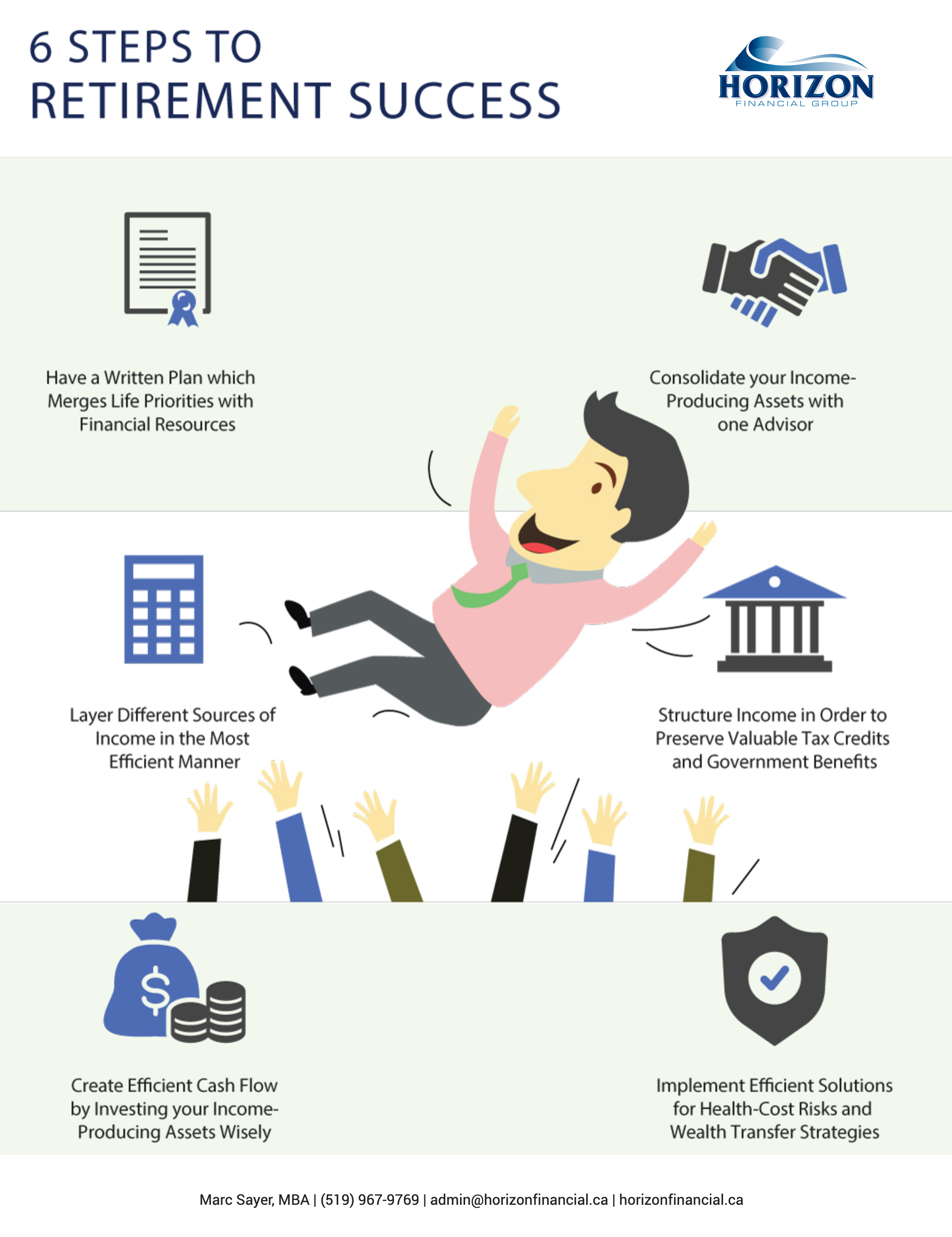
 Retirement planning can be challenging, we’ve outlined what we feel are 6 steps to retirement success.

  • Have a written plan which merges life priorities with financial resources.

  • Consolidate your income-producing assets with one advisor.

  • Layer different sources of income in the most efficient manner.

  • Structure income in order to preserve valuable tax credits and government benefits.

  • Create efficient cash flow by investing your income-producing assets wisely.

  • Implement efficient solutions for health-cost risks and wealth transfer strategies.

Talk to us about a complimentary comprehensive review of your retirement plan.


https://horizonfinancial.ca/wp-content/uploads/2020/08/500x500-6-STEPS-TO-RETIREMENT-SUCCESS-coverImage.png 500 500 Horizon Financial https://horizonfinancial.ca/wp-content/uploads/2019/12/horizonEnfold2.jpg Horizon Financial2020-08-05 11:06:002020-08-05 11:18:066 Steps to Retirement Success

Comparing TFSAs and RRSPs – 2020

January 30, 2020/in 2020 Only, Blog, Family, individuals, Investment, Retirees, rrsp, tax, Tax Free Savings Account/by Horizon Financial

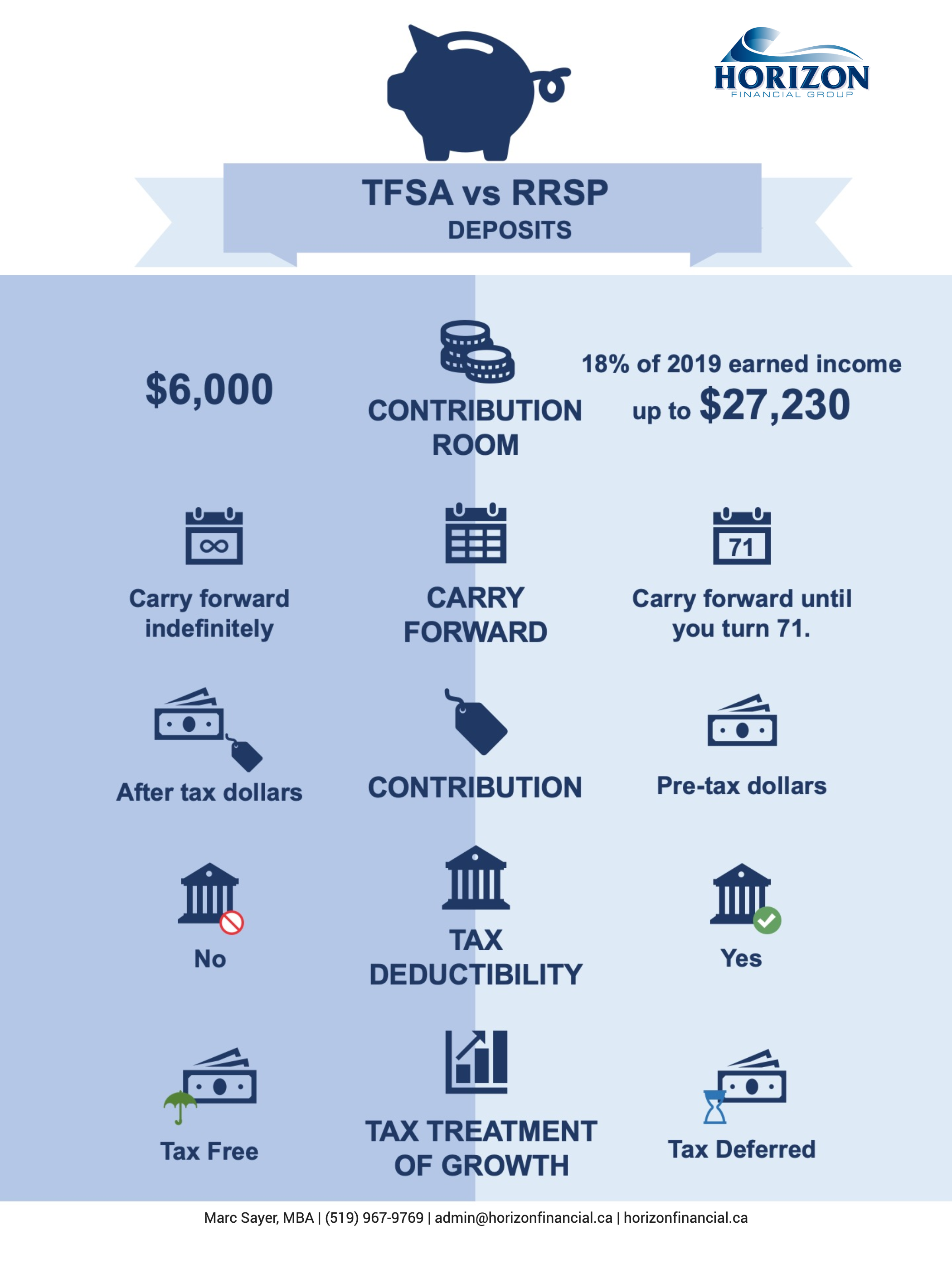
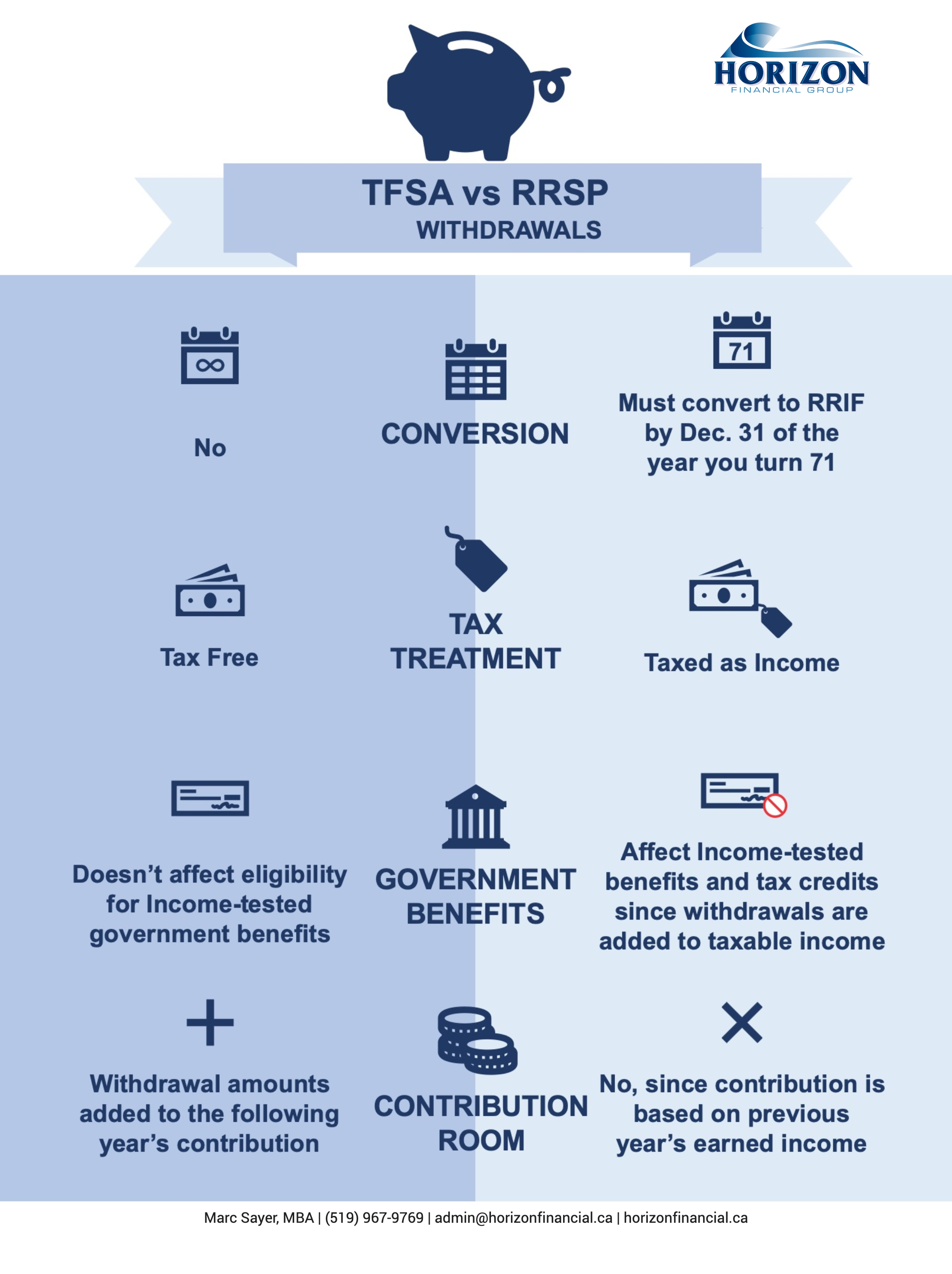
If you are seeking ways to save in the most tax-efficient manner available, TFSAs and RRSPs can both be effective options for you to achieve your savings goals more quickly. However, each plan does have distinct differences and advantages / disadvantages. We’ve separated our comparisons into 2 different infographics: deposits and withdrawals. 

In the Deposit phase, we look at:

  • Contribution Room

  • Carry Forward

  • Contribution

  • Tax Deductibility

  • Tax Treatment of Growth

Contribution Room

TFSA : $6,000 for 2020. If you never opened a TFSA, you can contribute up to $69,500 today.

  • $5,000 for each year from 2009 to 2012;

  • $5,500 for each of 2013 and 2014;

  • $10,000 for 2015;

  • $5,500 for each of 2016, 2017 and 2019

  • $6,000 for each of 2019 and 2020

RRSP : 18% of your 2020 pre-tax earned income or $27,230. So for example if you earned $60,000, then your deduction limit would be $10,800 (18% x $60,000). If you earned $200,000, then your deduction limit would be capped at the max limit of $27,230.

Carry Forward

TFSA : You can carry forward your unused contribution room indefinitely, as long as your a Canadian resident, older than age 18 with a valid social insurance number. Withdrawals will usually result in new contribution room.

RRSP : You can carry forward your unused contribution room until the age of 71 when you have to convert your RRSP to a RRIF. Any withdrawals made from your RRSP will not result in new contribution room.

Contribution

TFSA : You are contributing to your TFSA with After-tax dollars.

RRSP : You are contributing to your RRSP with Pre-tax dollars.

Tax Deductibility

TFSA : Contributions are not tax deductible.

RRSP : Contributions are tax deductible.

Tax Treatment of Growth

TFSA : The growth inside a TFSA is tax free therefore it’s a great savings vehicle for immediate objectives such as a down payment for a home.

RRSP : The growth inside an RRSP is tax deferred, which means at withdrawal, you will need to pay tax, therefore it’s a good choice for long term goals such as retirement.

In the Withdrawals phase, we look at:

  • Conversion

  • Tax Treatment

  • Government Benefits

  • Contribution Room

Conversion

TFSA : With a TFSA, there’s no conversion.

RRSP : You must convert your RRSP to a Registered Retirement Income Fund by December 31st of the year you turn 71.

Tax Treatment

TFSA : You can make tax-free withdrawals.

RRSP : Your withdrawals are taxed as income except for withdrawals under the Home Buyers Plan, which you can withdraw up to $35,000 providing you pay within 15 years or Lifelong Learning Plan, which you can withdraw up to $20,000 ($10,000 per year) providing that the money is paid back within 10 years.

Government Benefits

TFSA : Your withdrawals doesn’t affect eligibility for income tested government benefit because TFSA withdrawals aren’t included as taxable income.

RRSP : RRSP withdrawals are treated as taxable income therefore withdrawals may affect income tested tax credits such as Canada Child Tax Benefit, the Working Income Tax Benefit, the Goods and Services Tax Credit and the Age Credit.  Withdrawals may also affect government benefits you receive including Old Age Security, Guaranteed Income Supplement and Employment Insurance benefits.

Contribution Room

TFSA : You can carry forward your unused contribution room indefinitely, as long as your a Canadian resident, older than age 18 with a valid social insurance number. Withdrawals will usually result in new contribution room to the following year’s contribution.

RRSP : Contribution room is based on your previous year’s earned income. You can carry forward your unused contribution room until the age of 71 when you have to convert your RRSP to a RRIF. Any withdrawals made from your RRSP will not result in new contribution room.

An additional different to note is that:

  • You are able to specify your spouse as your beneficiary with both your TFSA and your RRSP, however there is a key difference with how your savings are treated upon your spouse’s death. With an RRSP, there will be taxes payable upon the monies left in the plan by your children who inherit it, whereas with a TFSA, tax is only paid on the increase in the value of the plan since the date of death in the year that it is inherited by your children. What’s more, no tax is payable if the value that they receive is less than the value of the TFSA at the time of death.

In summary, your unique financial needs will provide information on what makes the most sense for you.

Contact us and we can help.

https://horizonfinancial.ca/wp-content/uploads/2020/01/rrspTFSA-1.png 512 1024 Horizon Financial https://horizonfinancial.ca/wp-content/uploads/2019/12/horizonEnfold2.jpg Horizon Financial2020-01-30 06:00:002020-01-30 06:18:42Comparing TFSAs and RRSPs – 2020

Comparing TFSAs and RRSPs – 2020

January 21, 2020/in 2020 Only, Blog, Family, individuals, Investment, Retirees, rrsp, tax, Tax Free Savings Account/by Horizon Financial

If you are seeking ways to save in the most tax-efficient manner available, TFSAs and RRSPs can both be effective options for you to achieve your savings goals more quickly. However, each plan does have distinct differences and advantages / disadvantages. We’ve separated our comparisons into 2 different infographics: deposits and withdrawals. 

In the Deposit phase, we look at:

  • Contribution Room

  • Carry Forward

  • Contribution

  • Tax Deductibility

  • Tax Treatment of Growth

Contribution Room

TFSA : $6,000 for 2020. If you never opened a TFSA, you can contribute up to $69,500 today.

  • $5,000 for each year from 2009 to 2012;

  • $5,500 for each of 2013 and 2014;

  • $10,000 for 2015;

  • $5,500 for each of 2016, 2017 and 2019

  • $6,000 for each of 2019 and 2020

RRSP : 18% of your 2020 pre-tax earned income or $27,230. So for example if you earned $60,000, then your deduction limit would be $10,800 (18% x $60,000). If you earned $200,000, then your deduction limit would be capped at the max limit of $27,230.

Carry Forward

TFSA : You can carry forward your unused contribution room indefinitely, as long as your a Canadian resident, older than age 18 with a valid social insurance number. Withdrawals will usually result in new contribution room.

RRSP : You can carry forward your unused contribution room until the age of 71 when you have to convert your RRSP to a RRIF. Any withdrawals made from your RRSP will not result in new contribution room.

Contribution

TFSA : You are contributing to your TFSA with After-tax dollars.

RRSP : You are contributing to your RRSP with Pre-tax dollars.

Tax Deductibility

TFSA : Contributions are not tax deductible.

RRSP : Contributions are tax deductible.

Tax Treatment of Growth

TFSA : The growth inside a TFSA is tax free therefore it’s a great savings vehicle for immediate objectives such as a down payment for a home.

RRSP : The growth inside an RRSP is tax deferred, which means at withdrawal, you will need to pay tax, therefore it’s a good choice for long term goals such as retirement.

In the Withdrawals phase, we look at:

  • Conversion

  • Tax Treatment

  • Government Benefits

  • Contribution Room

Conversion

TFSA : With a TFSA, there’s no conversion.

RRSP : You must convert your RRSP to a Registered Retirement Income Fund by December 31st of the year you turn 71.

Tax Treatment

TFSA : You can make tax-free withdrawals.

RRSP : Your withdrawals are taxed as income except for withdrawals under the Home Buyers Plan, which you can withdraw up to $35,000 providing you pay within 15 years or Lifelong Learning Plan, which you can withdraw up to $20,000 ($10,000 per year) providing that the money is paid back within 10 years.

Government Benefits

TFSA : Your withdrawals doesn’t affect eligibility for income tested government benefit because TFSA withdrawals aren’t included as taxable income.

RRSP : RRSP withdrawals are treated as taxable income therefore withdrawals may affect income tested tax credits such as Canada Child Tax Benefit, the Working Income Tax Benefit, the Goods and Services Tax Credit and the Age Credit.  Withdrawals may also affect government benefits you receive including Old Age Security, Guaranteed Income Supplement and Employment Insurance benefits.

Contribution Room

TFSA : You can carry forward your unused contribution room indefinitely, as long as your a Canadian resident, older than age 18 with a valid social insurance number. Withdrawals will usually result in new contribution room to the following year’s contribution.

RRSP : Contribution room is based on your previous year’s earned income. You can carry forward your unused contribution room until the age of 71 when you have to convert your RRSP to a RRIF. Any withdrawals made from your RRSP will not result in new contribution room.

An additional different to note is that:

  • You are able to specify your spouse as your beneficiary with both your TFSA and your RRSP, however there is a key difference with how your savings are treated upon your spouse’s death. With an RRSP, there will be taxes payable upon the monies left in the plan by your children who inherit it, whereas with a TFSA, tax is only paid on the increase in the value of the plan since the date of death in the year that it is inherited by your children. What’s more, no tax is payable if the value that they receive is less than the value of the TFSA at the time of death.

In summary, your unique financial needs will provide information on what makes the most sense for you.

Contact us and we can help.

https://horizonfinancial.ca/wp-content/uploads/2020/01/rrspTFSA.png 512 1024 Horizon Financial https://horizonfinancial.ca/wp-content/uploads/2019/12/horizonEnfold2.jpg Horizon Financial2020-01-21 06:54:422020-01-21 07:06:33Comparing TFSAs and RRSPs – 2020

2020 Financial Calendar

January 1, 2020/in Blog, Business Owners, corporate, individuals, Investment, rrsp, tax, Tax Free Savings Account/by Horizon Financial

2020 Financial Calendar

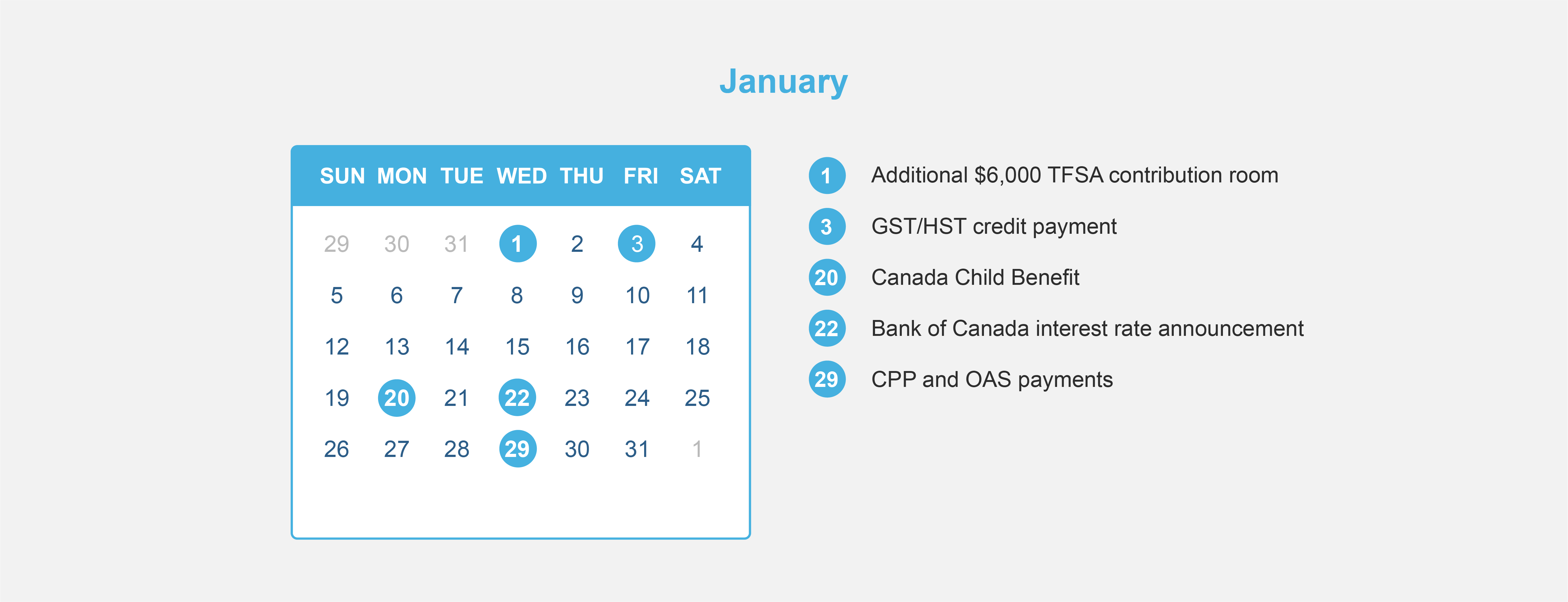
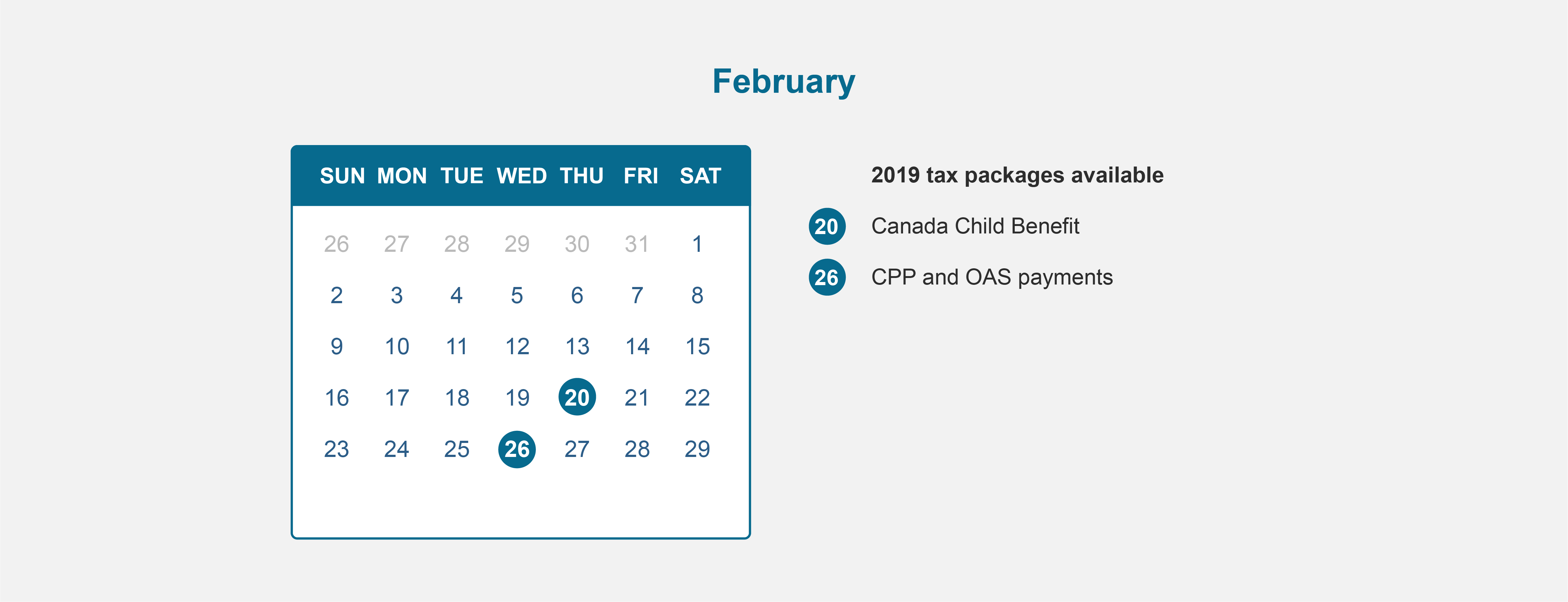
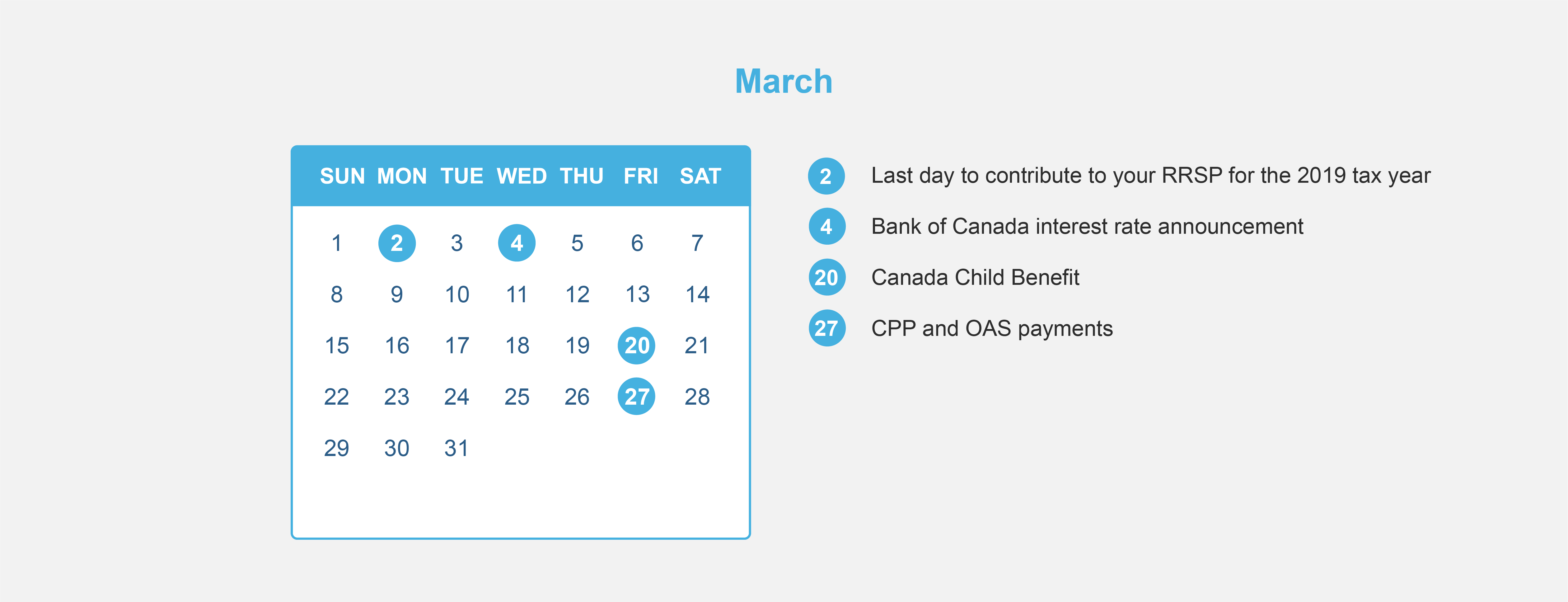
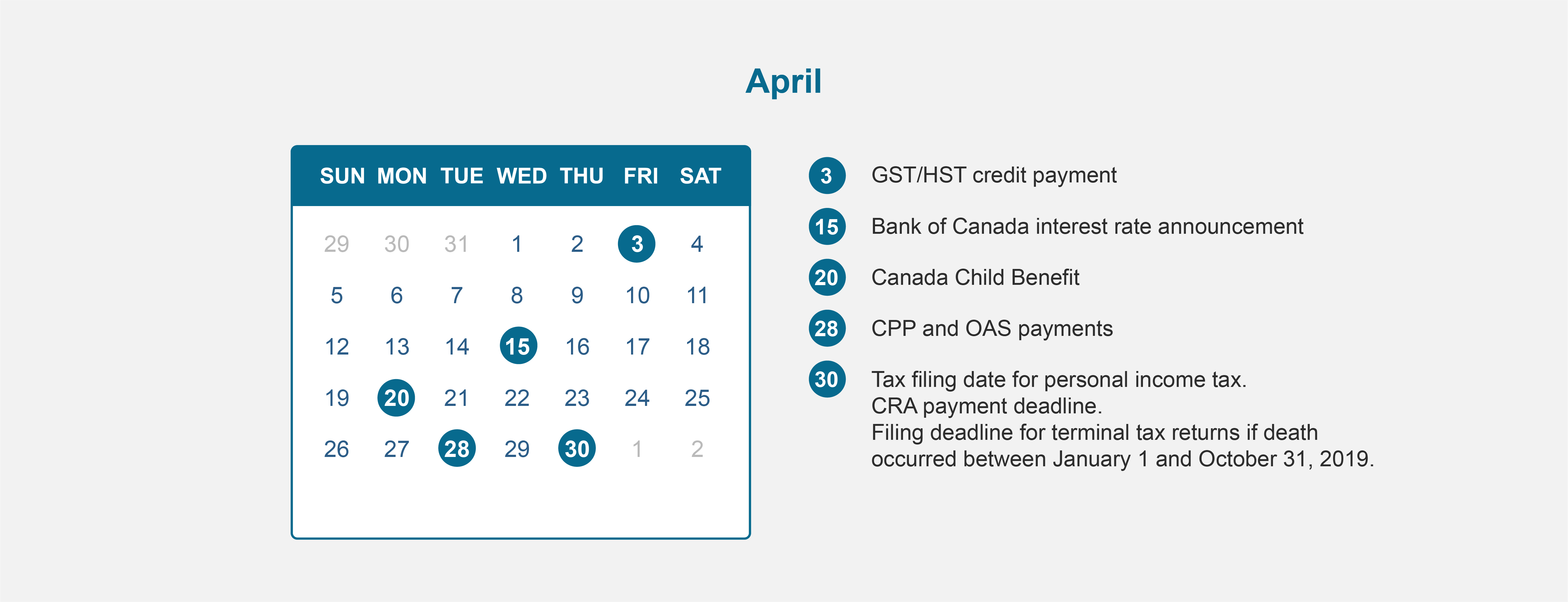
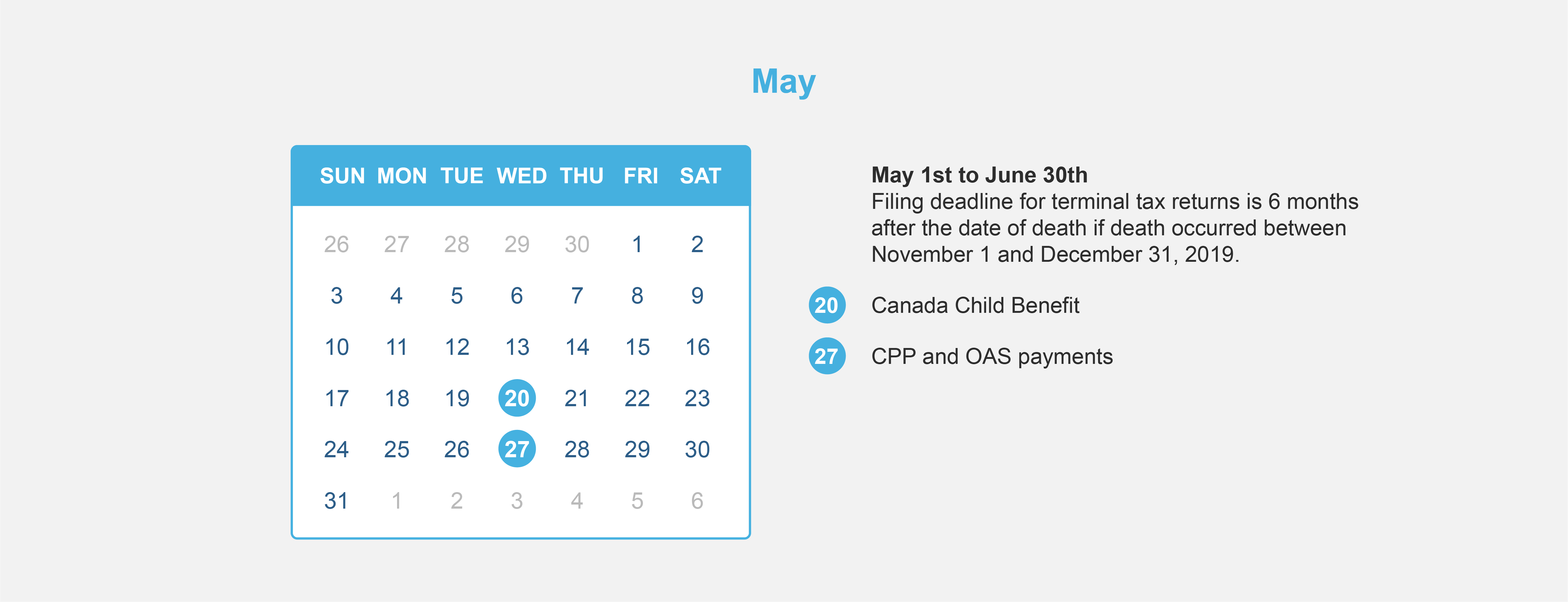
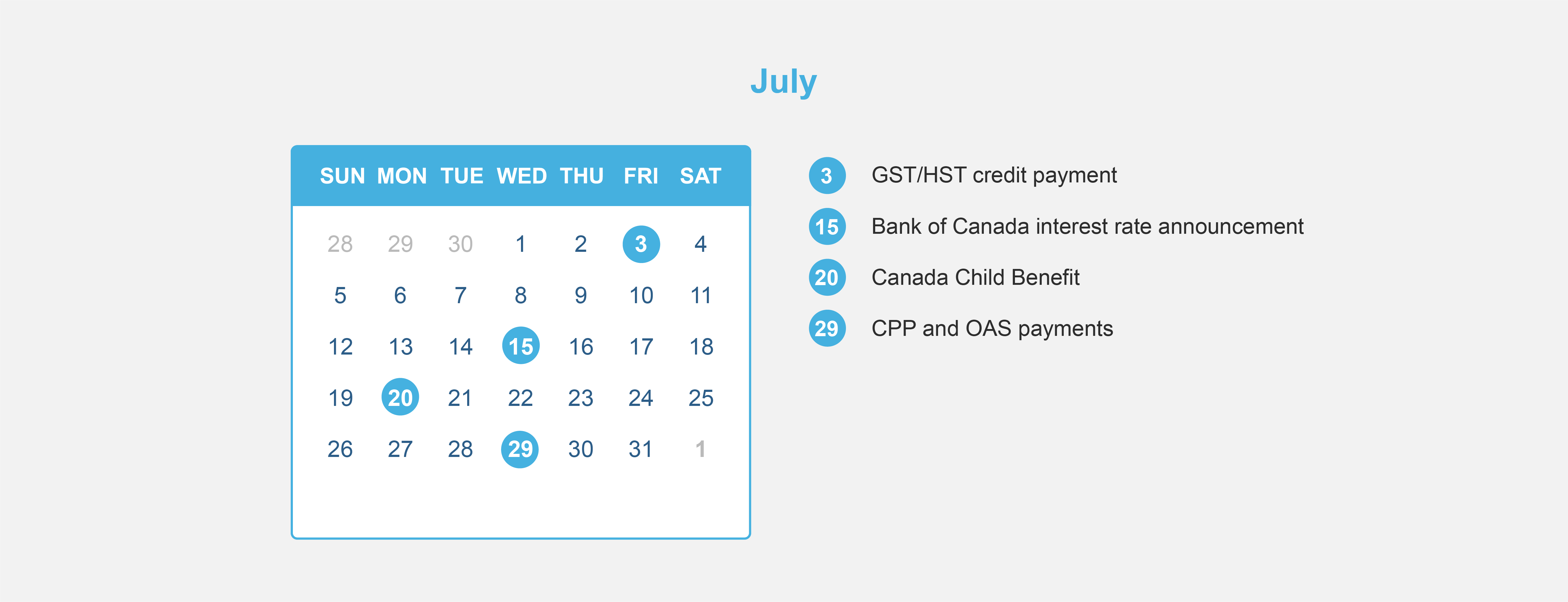
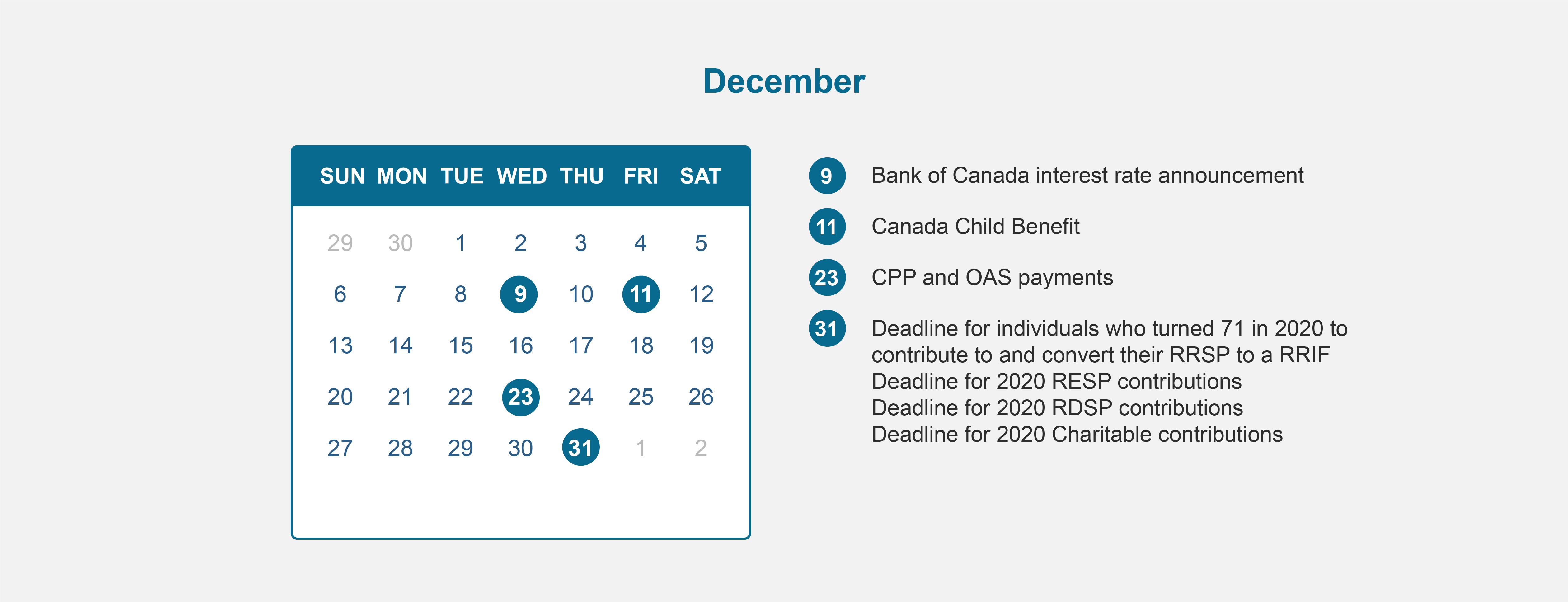
Financial Calendar for 2020 – All the dates you need to know to maximize your benefits!

https://horizonfinancial.ca/wp-content/uploads/2020/01/2020calendarFeaturedImage.png 512 1024 Horizon Financial https://horizonfinancial.ca/wp-content/uploads/2019/12/horizonEnfold2.jpg Horizon Financial2020-01-01 12:15:252020-01-03 20:10:502020 Financial Calendar
Page 2 of 212

Get in Touch

Horizon Financial Group

Tel: (519) 967-9769
admin@horizonfinancial.ca

3612 Walker Road
Windsor, ON
N8W 3S7

Latest News

  • Tax Lines to Look Out For on Your 2025 Canadian Tax ReturnApril 1, 2026 - 12:45 pm
  • Ontario Budget 2026March 30, 2026 - 10:15 am
  • 2026 Canada Money FactsMarch 2, 2026 - 11:52 am

About

As one of the largest providers of benefit consulting and administration services to Southern Ontario for more than a decade, we help you to take advantage of our flexible solutions to develop pension, health and group benefit strategies.

©2019 Financial Tech Tools Inc. | Privacy Statement and Terms of Use The information on this website is intended for residents of Ontario only. The use of email is not a secure medium and confidential financial information should be transmitted by more secure means. Click here to view legal, copyright and trademark information. Quadrus, Quadrus and design, Quadrus Investment Services Ltd. and design and Quadrus group of Funds are trademarks of Quadrus Investment Services Ltd. Used with permission. Mortgage referrals and insurance products, including segregated fund policies, are offered through Horizons Financial offers mutual funds through Quadrus Investment Services Ltd.
  • Link to LinkedIn
  • Link to X
Scroll to top Scroll to top Scroll to top