10 Essential Decisions for Business Owners

10 Essential Decisions for Business Owners

Business owners can be busy… they are busy running a successful business, wearing lots of hats and making a ton of decisions. We’ve put together a list of 10 essential decisions for every business owner to consider; from corporate structure to retirement and succession planning:

  • Best structure for your business (ex. Sole Proprietor, Corporation, Partnership)

  • Reduce taxes

  • What to do with surplus cash

  • Build employee loyalty

  • Reduce risk

  • Deal with the unexpected

  • Retire from your business

  • Sell your business

  • Keep your business in the family

  • What to do when you’re retired

As a financial advisor, we are uniquely positioned to help business owners, talk to us about your situation and we can provide the guidance you need.

Succession Planning for Business Owners

Succession Planning for Business Owners

Business owners deal with a unique set of challenges. One of these challenges includes succession planning. A succession plan is the process of the transfer of ownership, management and interest of a business. When should a business owner have a succession plan? A succession plan is required through the survival, growth and maturity stage of a business. All business owners, partners and shareholders should have a plan in place during these business stages.

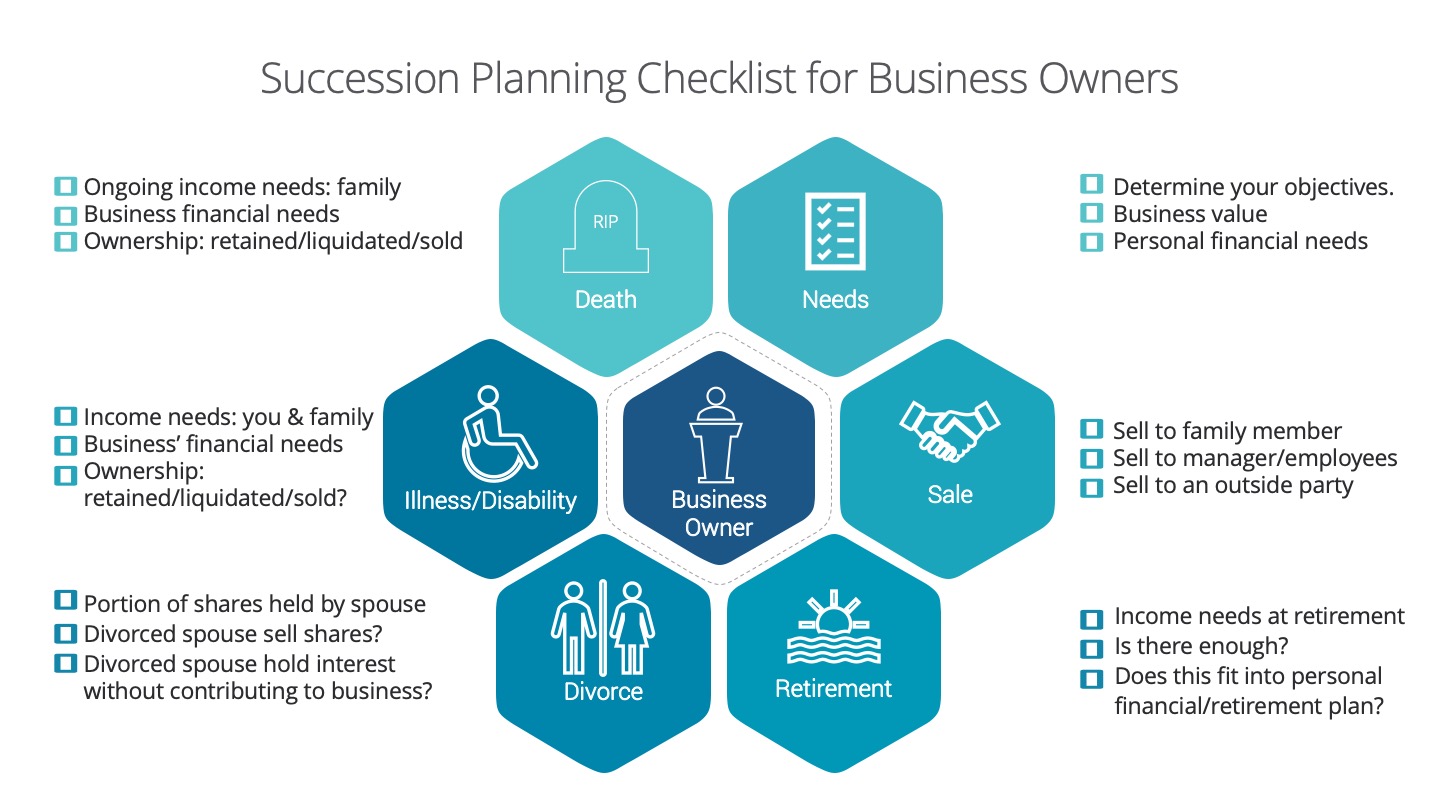
We created this infographic checklist to be used as a guideline highlighting main points to be addressed when starting to succession plan.

Needs:

  • Determine your objectives- what do you want? For you, your family and your business. (Business’ financial needs)

  • What are your shares of the business worth? (Business value)

  • What are your personal financial needs- ongoing income needs, need for capital (ex. pay off debts, capital gains, equitable estate etc.)

There are 2 sets of events that can trigger a succession plan: controllable and uncontrollable.

Controllable events

Sale: Who do you sell the business to?

  • Family member

  • Manager/Employees

  • Outside Party

  • There are advantages and disadvantages for each- it’s important to examine all channels.

Retirement: When do you want to retire?

  • What are the financial and psychological needs of the business owner?

  • Is there enough? Is there a need for capital to provide for retirement income, redeem or freeze shares?

  • Does this fit into personal/retirement plan? Check tax, timing, corporate structures, finances and family dynamics. (if applicable)

Uncontrollable Events

Divorce: A disgruntled spouse can obtain a significant interest in the business.

  • What portion of business shares are held by the spouse?

  • Will the divorced spouse consider selling their shares?

  • What if the divorced spouse continues to hold interest in the business without understanding or contributing to the business?

  • If you have other partners/shareholders- would they consider working with your divorced spouse?

Illness/Disability: If you were disabled or critically ill, would your business survive?

  • Determine your ongoing income needs for you, your spouse and family. Is there enough? If there is a shortfall, is there an insurance or savings program in place to make up for the shortfall amount?

  • Will the ownership interest be retained, liquidated or sold?

  • How will the business be affected? Does the business need capital to continue operating or hire a consultant or executive? Will debts be recalled? Does the business have a savings or insurance program in place to address this?

Death: In the case of your premature death, what would happen to your business?

  • Determine your ongoing income needs for your dependents. Is there enough? If there is a shortfall, is there an insurance or savings program in place to make up for the shortfall amount?

  • Will the ownership interest be retained, liquidated or sold by your estate? Does your will address this? Is your will consistent with your wishes? What about taxes?

  • How will the business be affected? Does the business need capital to continue operating or hire a consultant or executive? Will debts be recalled? How will this affect your employees? Does the business have a savings or insurance program in place to address this?

Execution: It’s good to go through this with but you need to get a succession plan done.  Besides having a succession plan, make sure you have an estate plan and buy-sell/shareholders’ agreement.

Because a succession plan is complex, we suggest that a business owner has a professional team to help. The team should include:

  • Financial Planner/Advisor (CFP)

  • Succession Planning Specialist

  • Insurance Specialist

  • Lawyer

  • Accountant/Tax Specialist

  • Chartered Life Underwriter (CLU)

Next steps…

  • Contact us about helping you get your succession planning in order so you can gain peace of mind that your business is taken care of.

Estate Planning for Young Families

Having a family is a blessing and can also bring a lot of worry. A lot of this worry can stem from not being prepared for a disaster like if something were to happen to you or your spouse.

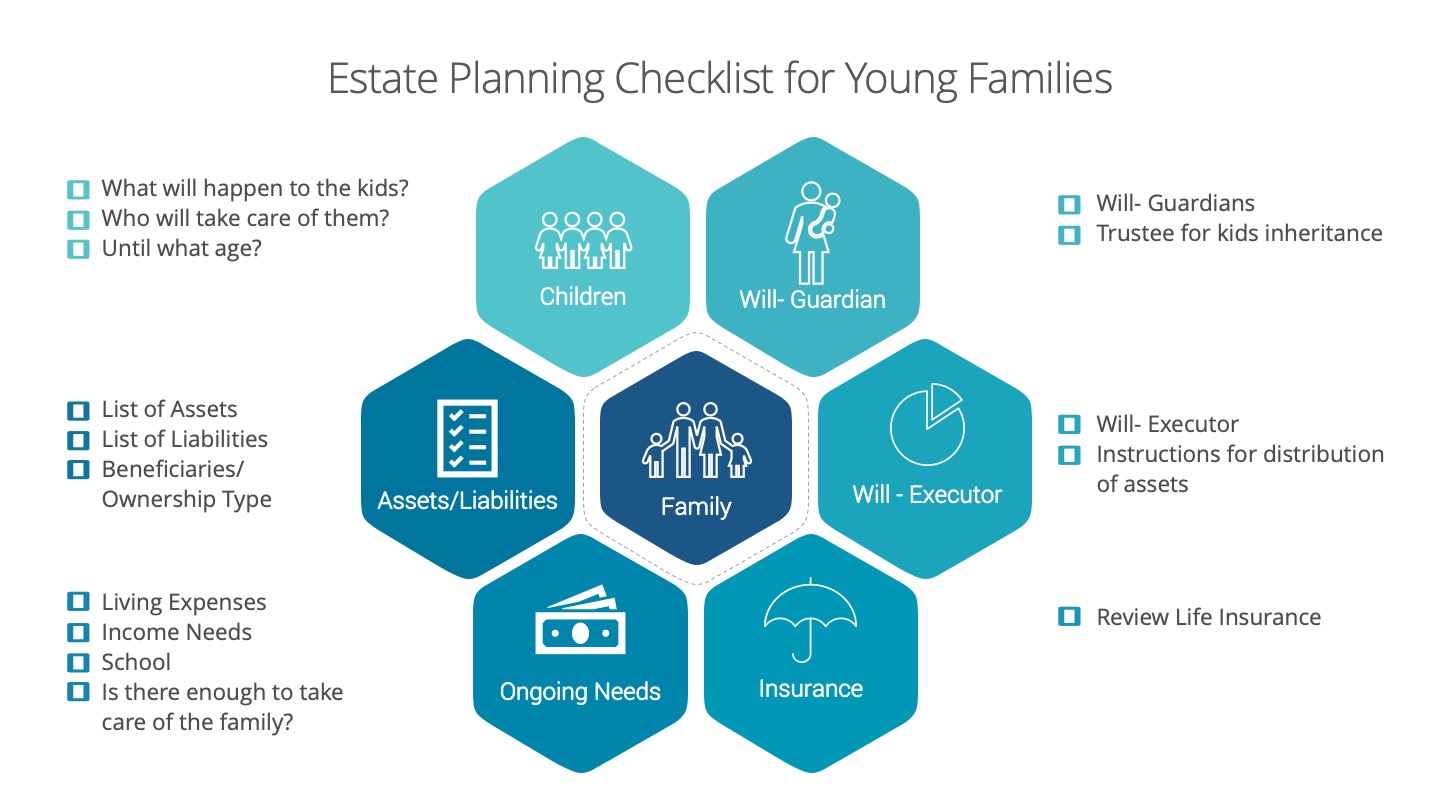
We’ve put together an infographic checklist that can help you get started on this. We know this can be a difficult conversation so we’re here to help and provide guidance.

The Children

  • What will happen to the children if both parents were to pass away?

  • Who would take care of them and until what age?

  • What would happen if only parent were to pass away?

Make sure you have a will that:

  • Assigns a guardian for your children

  • If there’s an inheritance for the children, who will take care of this? Make sure you assign a trustee for the inheritance.

  • Always choose 2 qualified people for each position and communicate your intentions with them to ensure they’re up for the responsibility.

Assets and Liabilities

  • What are your assets? Create a detailed list of your assets such as: Home, Family Business Interest, Investments- Non registered, TFSA, RRSP, RDSP, RESP, Company Pension Plan, Insurance Policy, Property, Additional revenue sources, etc…

  • What are your liabilities? Create a detailed list of your liabilities such as: Mortgage, Loans (personal, student, car), Line of Credit, Credit card, Other loans (payday, store credit card, utility etc.)

  • Understand your assets-the ownership type (joint, tenants in common, sole etc.), list who are the beneficiaries are for your assets

  • Understand your liabilities- who’s on the hook for paying back the loan?

Make sure you have a will that:

  • Assigns an executor

  • Provide specific instructions for distribution of assets

  • Always choose 2 qualified people for each position and communicate your intentions with them to ensure they’re up for the responsibility. 

Ongoing Needs

What are your family’s ongoing needs?

  • List out the living expenses

  • List out income needs

  • Do you still need to pay for school?

  • Determine if you have enough (assets minus liabilities) to take care of the family.

Make sure you review your insurance.

  • Once you determine how much need there is, review your life insurance coverage to see if it meets your needs or if there’s a shortfall.

Execution: It’s good to go through this but you need to do this. Besides doing it yourself, here’s a list of the individuals that can help:

  • Financial Planner/Advisor (CFP)

  • Estate Planning Specialist

  • Insurance Specialist

  • Lawyer

  • Accountant/Tax Specialist

  • Chartered Life Underwriter (CLU)

  • Chartered Executor Advisor (CEA)

There are definitely unique situations in many families and things can get complicated so please use this when you feel it’s applicable.

Next steps…

  • Contact us about helping you get your estate planning in order so you can gain peace of mind that your family is taken care of.

Financial Advice

An advisor can help you determine where you are today financially and where you want to go. An advisor can provide you guidance on how to reach your short, medium and long term financial goals.

Why work with a Financial Advisor? 

  • Worry less about money and gain control. 

  • Organize your finances. 

  • Prioritize your goals. 

  • Focus on the big picture. 

  • Save money to reach your goals.

What can a Financial Advisor help you with? 

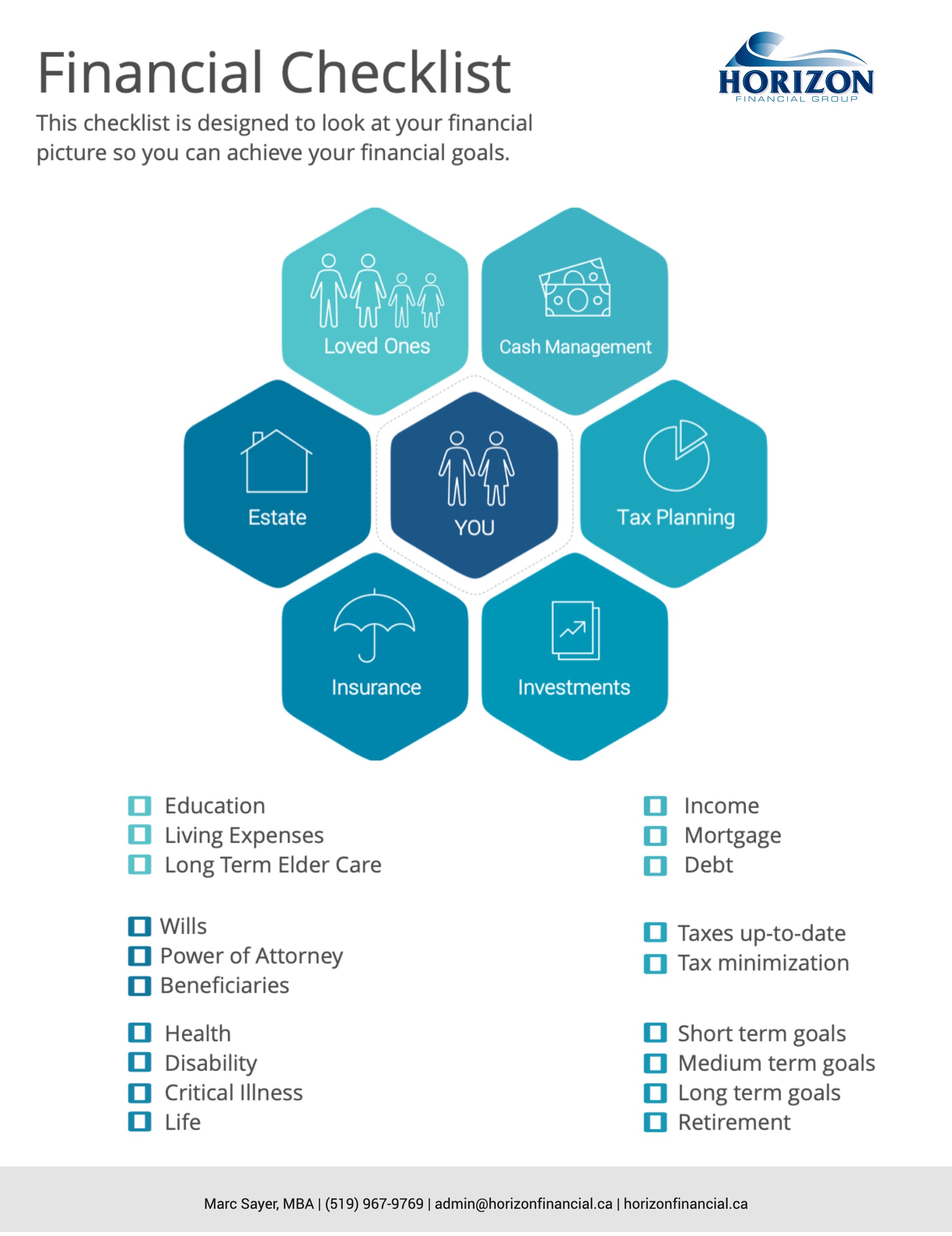
Advisors can help you with accumulation and protection

Accumulation: 

  • Cash Management – Savings and Debt

  • Tax Planning

  • Investments

Protection: 

  • Insurance Planning

  • Health Insurance

  • Estate Planning

How do you start? 

  • Establish and define the financial advisor-client relationship.

  • Gather information about current financial situation and goals including lifestyle goals. 

  • Analyze and evaluate current financial status. 

  • Develop and present strategies and solutions to achieve goals. 

  • Implement recommendations. 

  • Monitor and review recommendations. Adjust if necessary. 

Next steps…

  • Talk to us about helping you get your finances in order so you can achieve your lifestyle and financial goals. 

  • Feel confident in knowing you have a plan to get to your goals.